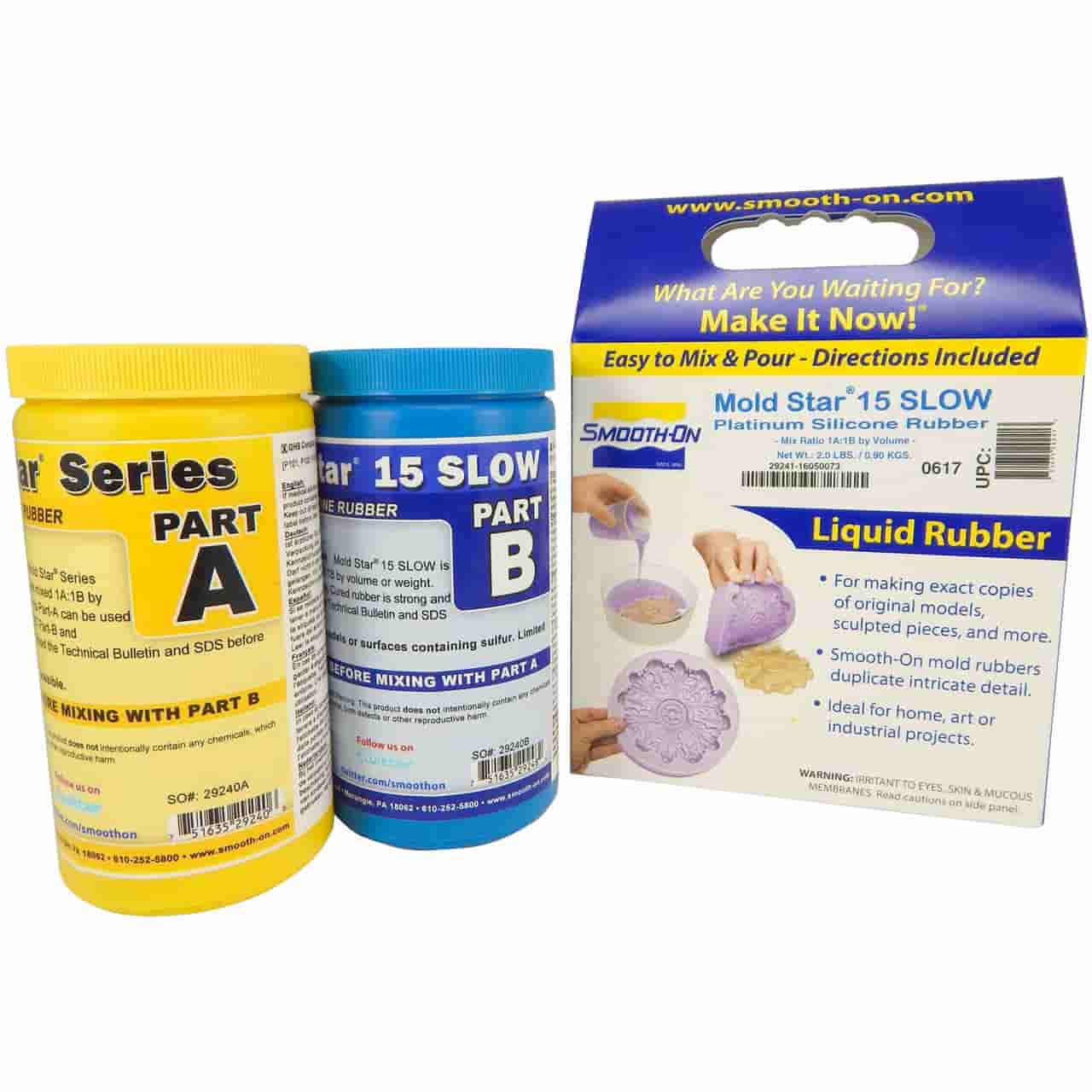
Mold Star™ 15 Slow is a platinum-cure silicone rubber used for mold making. It is commonly used to cast wax, gypsum, resin, concrete, and low-temperature metal alloys. The silicone cures into a soft and tear-resistant rubber with very low shrinkage.
Use in a properly ventilated area. Wear:
Avoid contamination with sulfur-containing materials because they can prevent curing. Store and use at room temperature (23°C).
After mixing equal parts A and B, stir thoroughly while scraping the sides and bottom of the container. The silicone remains workable for about 50 minutes before starting to cure. The mold can generally be demolded after 4 hours.
The cured silicone is soft and flexible, making it useful for molds with undercuts or delicate details.
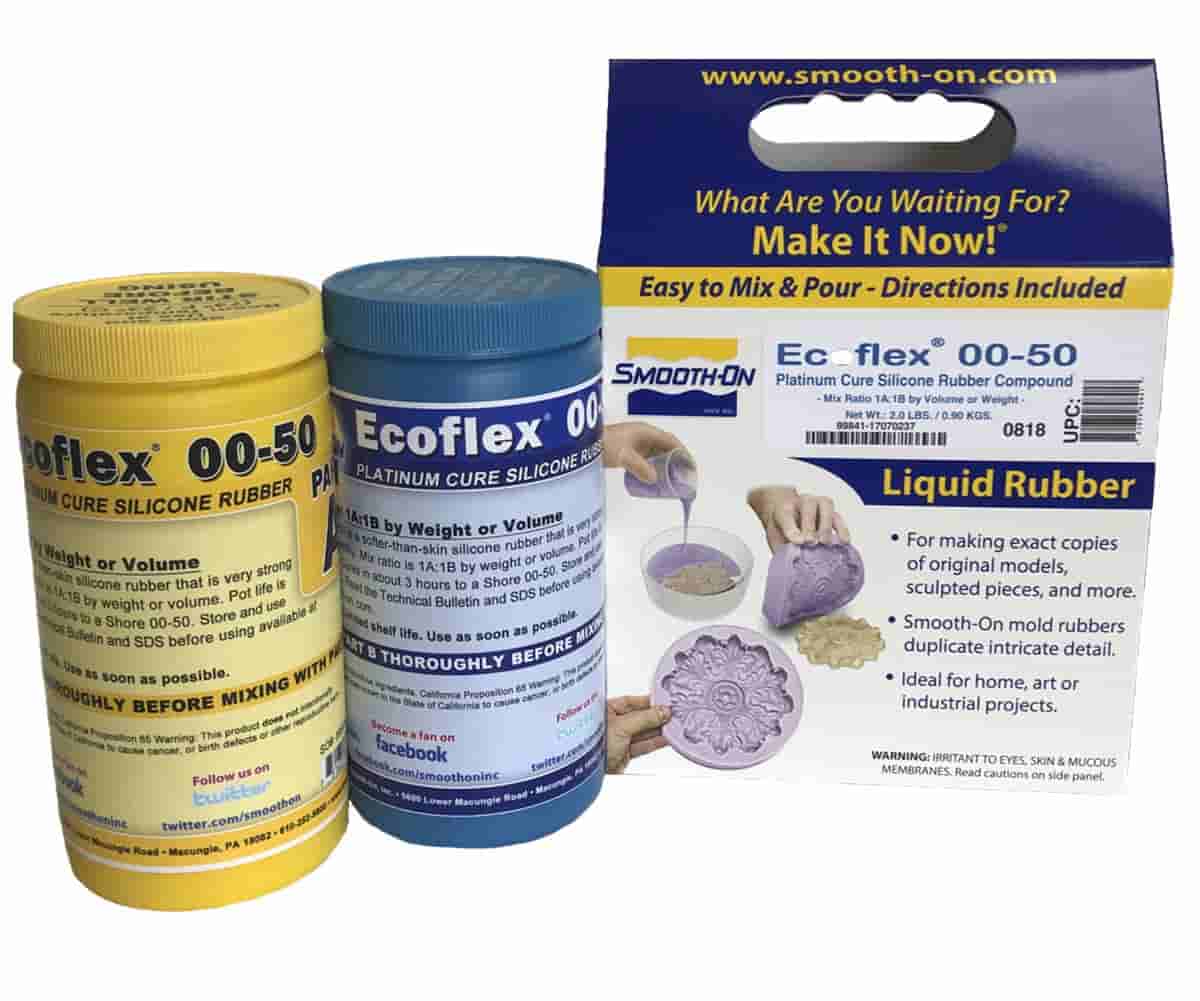
Ecoflex™ 00-50 is a very soft platinum-cure silicone rubber designed for applications requiring high flexibility and repetitive movement, such as prosthetics, wearable parts, animatronics, and soft molds.
Recommended safety precautions include:
Avoid skin and eye contact. Even though cured Ecoflex is considered skin-safe, uncured components should still be handled carefully.
Mix Parts A and B thoroughly for several minutes while scraping the container walls and bottom. Ecoflex cures at room temperature with negligible shrinkage and produces an extremely flexible rubber.
Because the material is very soft, it is ideal for flexible casts and wearable soft parts.
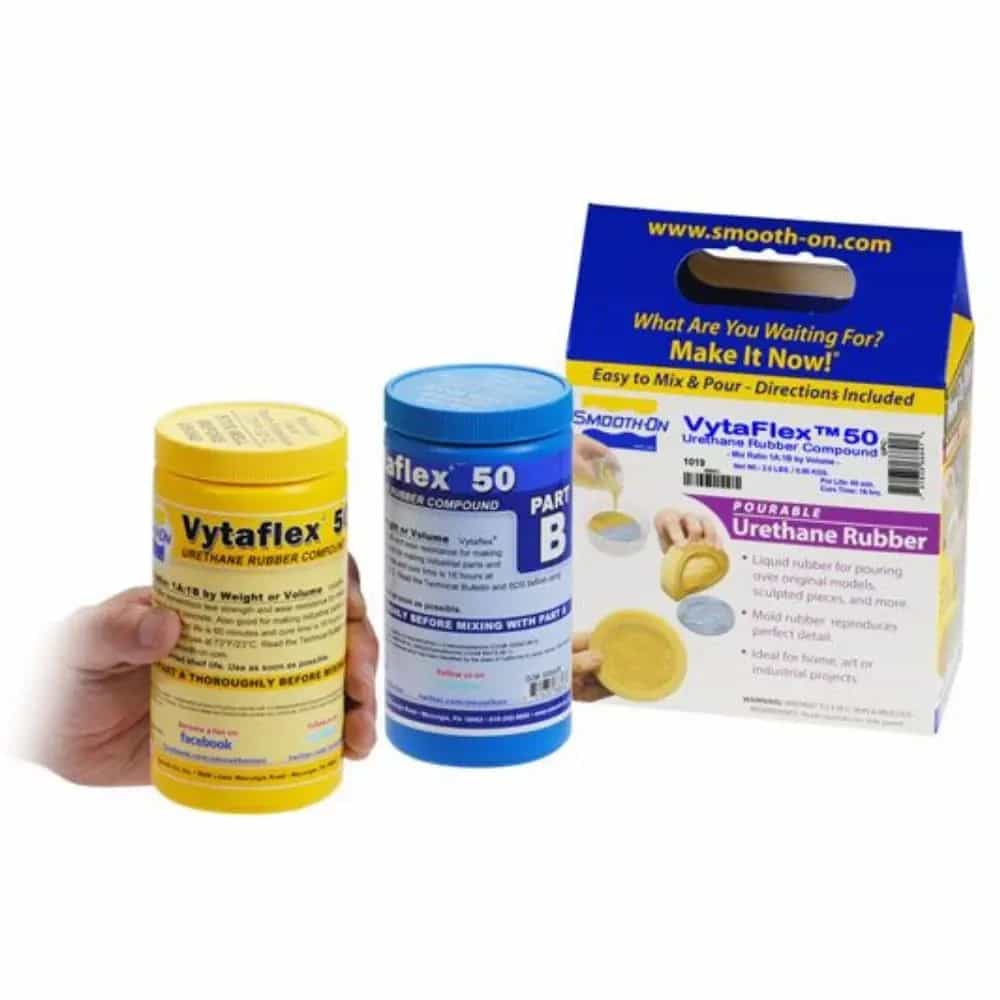
VytaFlex® 50 is a polyurethane rubber designed for making flexible yet durable molds and cast parts. Compared to softer silicones, it produces tougher and more abrasion-resistant rubber components.
Use with proper ventilation and wear:
Hazards listed in the SDS include:
Part B should be pre-mixed before use. After measuring equal amounts of Parts A and B, mix thoroughly for at least 3 minutes while scraping the sides and bottom of the container.
Allow curing at room temperature for 16–24 hours before demolding. Optional post-curing at 65°C for several hours can improve physical properties.
The mixed material cures into a strong and flexible amber-colored rubber.
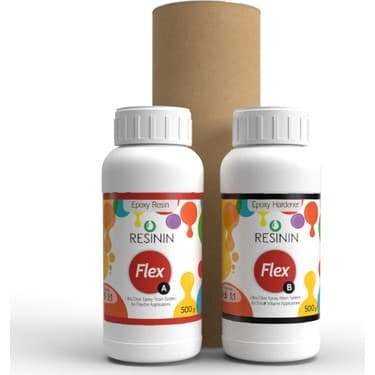
Flex Original is a flexible epoxy resin system used for creating soft or bendable resin parts. It is commonly used when flexibility is required instead of rigid epoxy results.
Although odorless and solvent-free, standard resin safety precautions should still be followed:
Epoxy resins may cause skin irritation or allergic reactions after repeated exposure.
Measure equal amounts of resin and hardener carefully and mix thoroughly until the mixture becomes uniform. Improper mixing may leave sticky or uncured areas.
The cured resin remains flexible instead of becoming rigid like standard epoxy systems.
| Material | Type | Flexibility | Pot Life | Cure Time | Main Use |
|---|---|---|---|---|---|
| Mold Star 15 Slow | Platinum silicone | Soft | 50 min | 4 h | Mold making |
| Ecoflex 00-50 | Platinum silicone | Extremely soft | 18 min | Fast room-temp cure | Wearables / soft parts |
| VytaFlex 50 | Polyurethane rubber | Flexible & durable | 30 min | 16–24 h | Tough rubber casts |
| Resinin Flex Original | Flexible epoxy | Flexible resin | Depends on batch | Room-temp cure | Flexible resin parts |
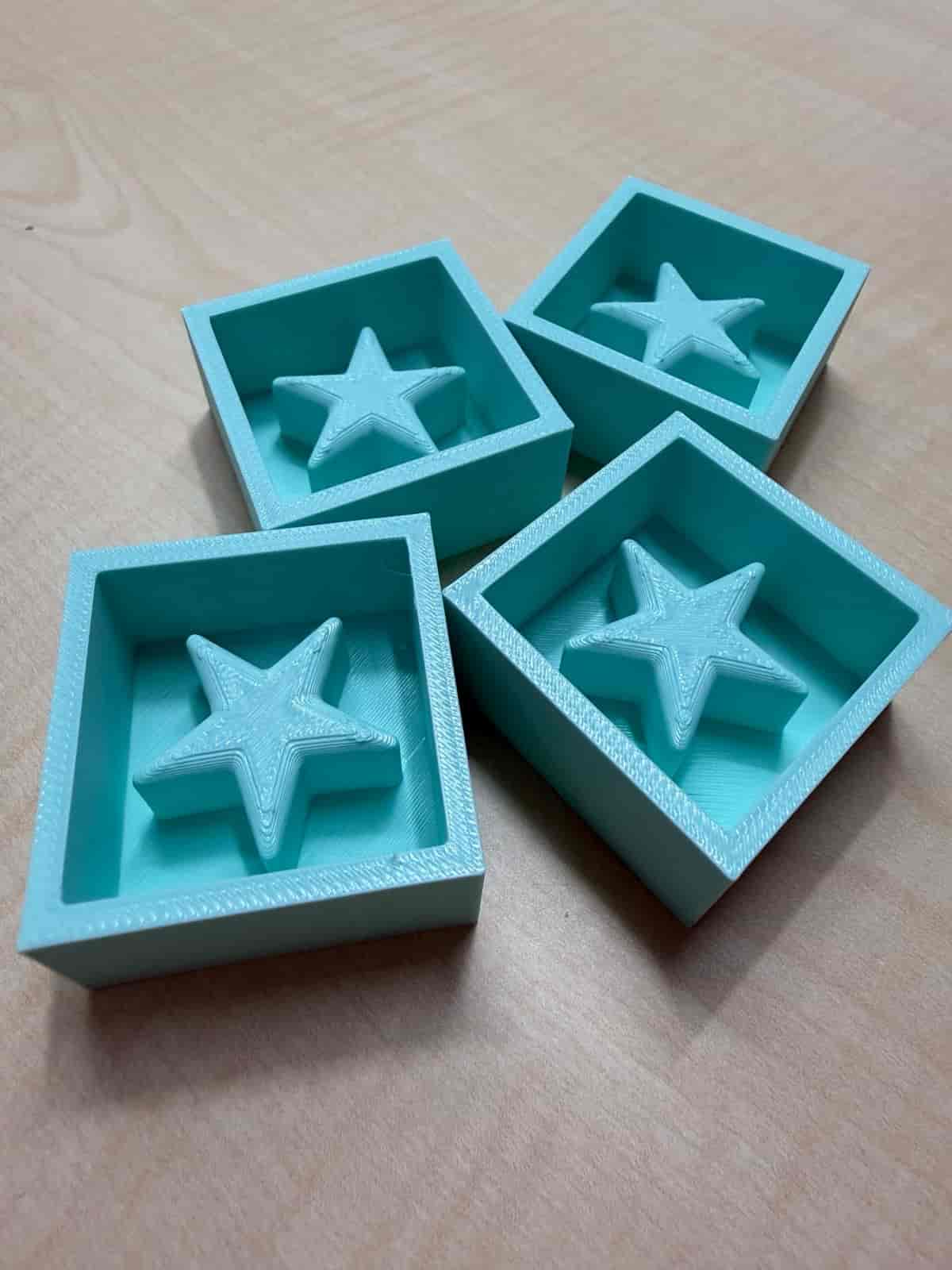
Advantages
Disadvantages
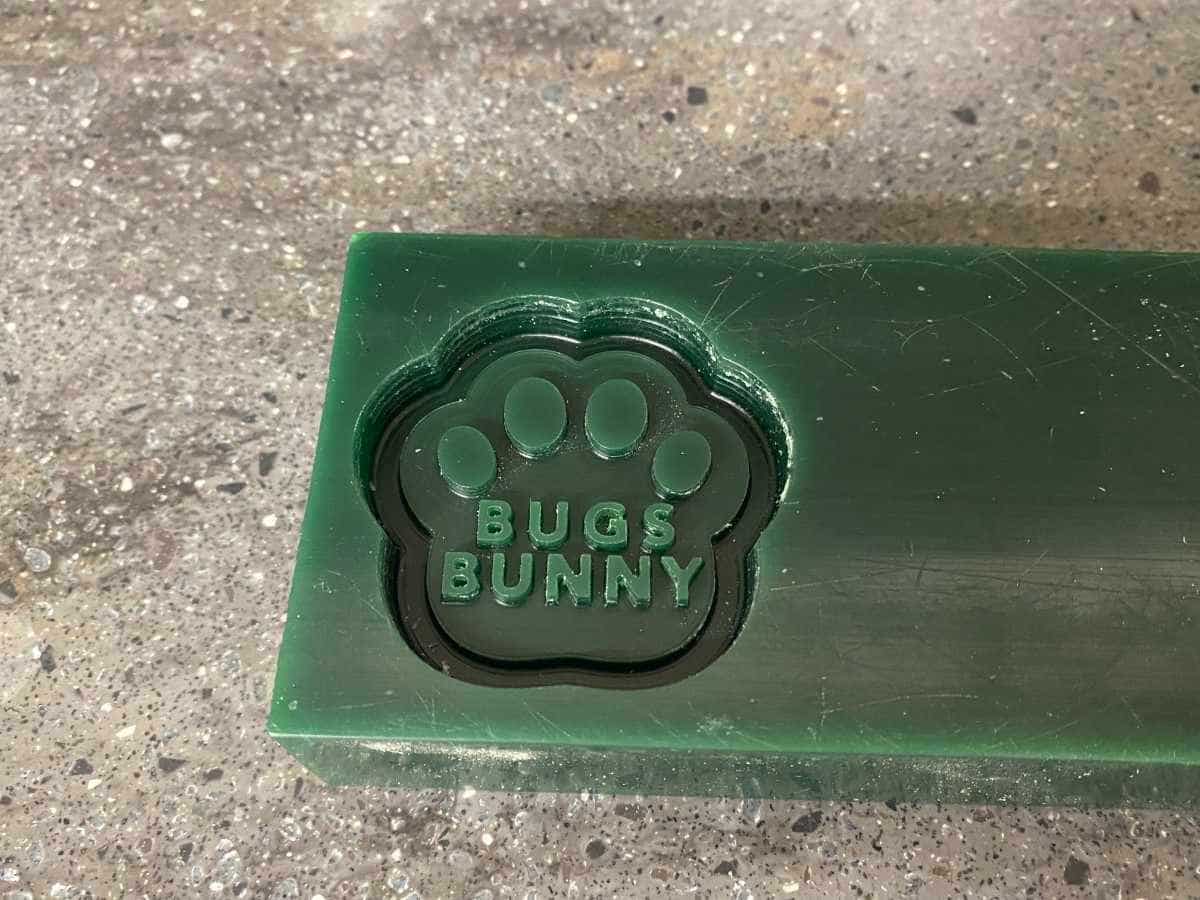
Advantages
Disadvantages
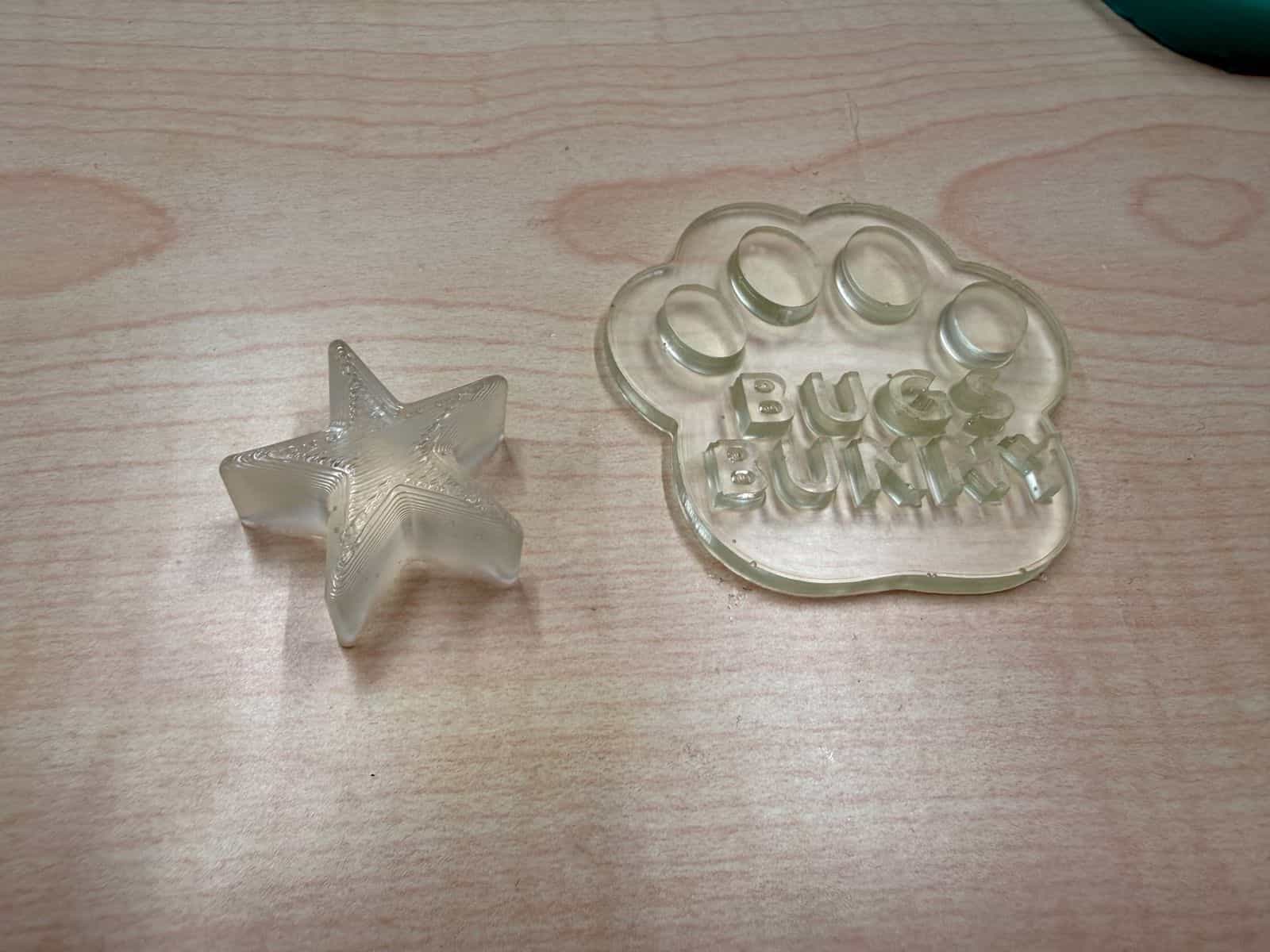
We tested both using the Mold Star 15 Slow.
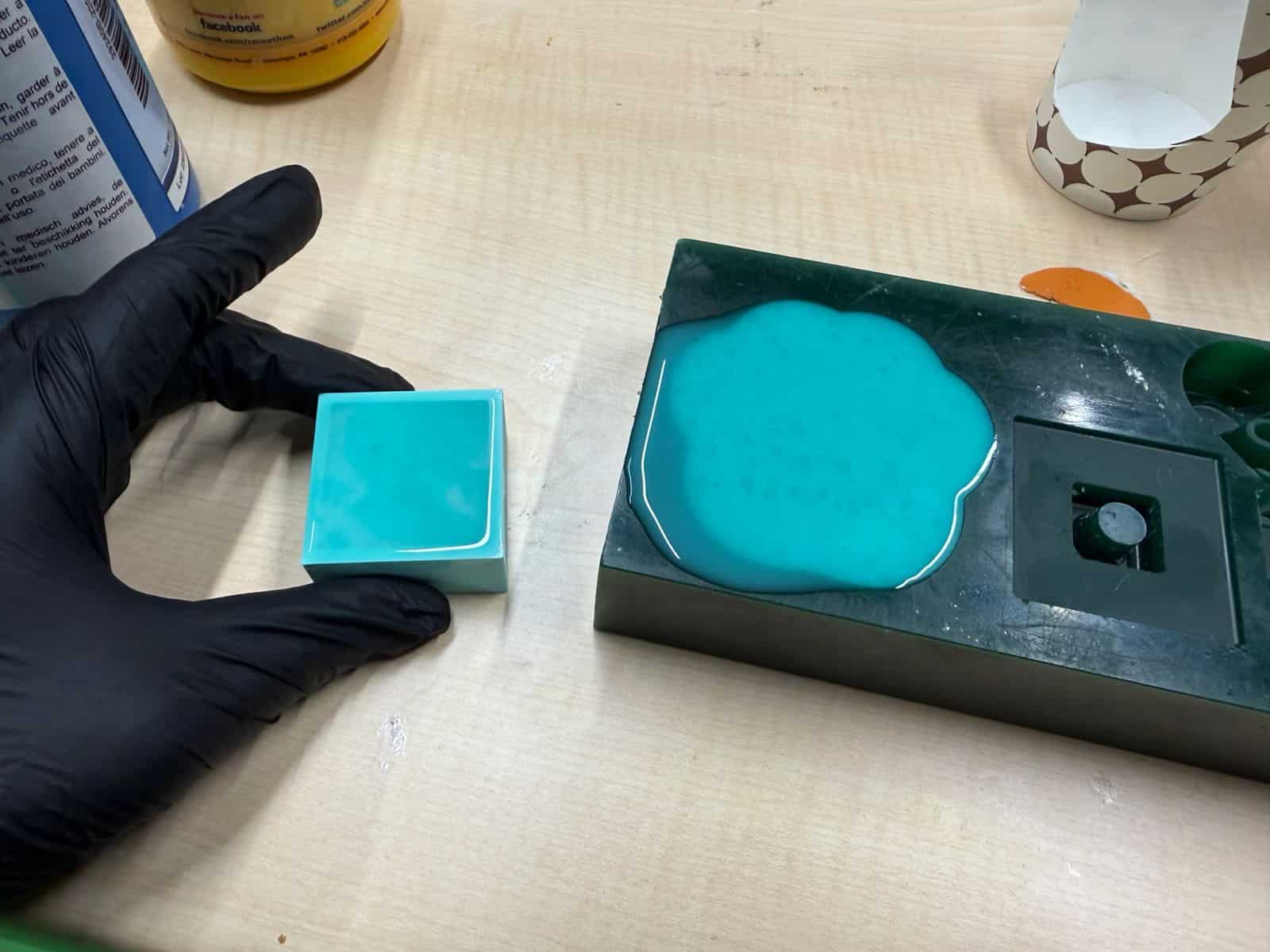
In our tests, milled molds generally produced smoother cast surfaces, while printed molds allowed more complex shapes and faster iteration.
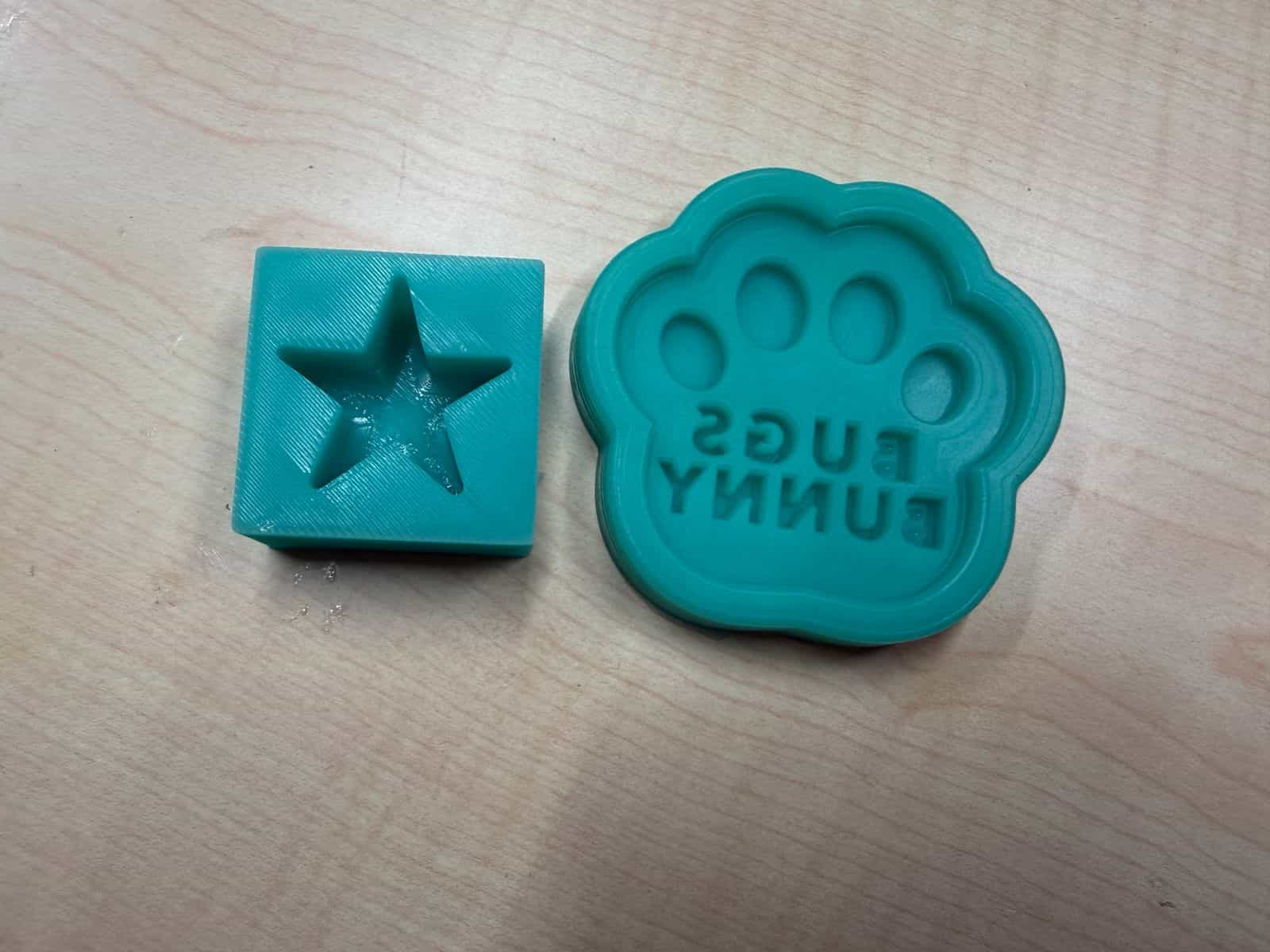
We tested three different flexible casting materials: Smooth-On Ecoflex™ 00-50, Smooth-On VytaFlex® 50, and Resinin Flex Original Flexible Epoxy Resin System. Even though the mold geometries were different, it was still possible to compare their handling, curing behavior, flexibility, and final material properties.
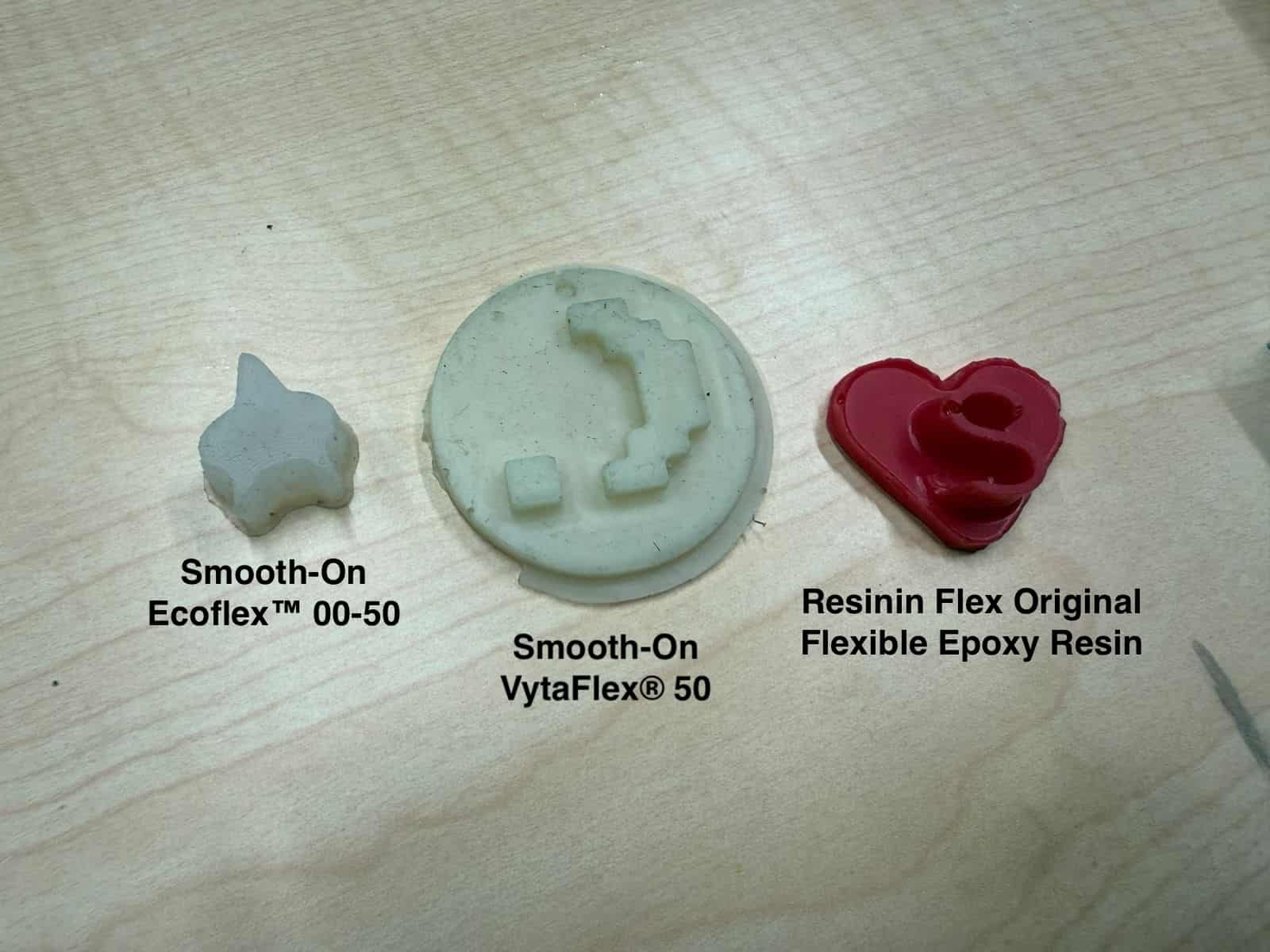
Ecoflex 00-50 produced the softest and most elastic result among all the tested materials. The material mixed and poured easily because of its low viscosity and cured into a highly flexible silicone rubber.
Observations:
The short pot life required relatively quick mixing and pouring.
VytaFlex 50 resulted in a much tougher and more durable flexible material compared to Ecoflex. While it still bends, it feels significantly firmer and more resistant to deformation.
Observations:
This material is more suitable for functional rubber components and durable flexible parts rather than extremely soft applications.
Resinin Flex behaved differently from the silicone and polyurethane materials because it is an epoxy-based flexible resin. The cured result was flexible but still noticeably more rigid than Ecoflex and slightly less rubbery than VytaFlex.
Observations:
This material is better suited for semi-flexible parts where some structural stiffness is still desired.
| Material | Feel After Curing | Flexibility | Toughness | Surface Finish | Best Use |
|---|---|---|---|---|---|
| Ecoflex 00-50 | Very soft | Extremely high | Low | Matte silicone finish | Soft wearable parts |
| VytaFlex 50 | Rubber-like | Medium | High | Durable rubber finish | Functional flexible parts |
| Resinin Flex Original | Semi-flexible | Moderate | Medium | Smooth/glossy resin finish | Semi-rigid flexible parts |
Even though the mold geometries differed, the tests clearly demonstrated the differences in elasticity, hardness, surface quality, and durability between silicone rubber, polyurethane rubber, and flexible epoxy resin systems.